Leather shoes are an investment, and with the right care, they can serve you for many years. Quality leather is essentially skin – tough yet inherently vulnerable because, unlike our own skin, it can’t repair or hydrate itself. If neglected, leather dries out, cracks, and those cracks are often irreversible. In fact, many premium leather shoes only get better with age, provided you know how to clean leather shoes and maintain them properly. From daily habits to deep conditioning, here’s how to take care of leather shoes so they stay looking great and last longer than you ever expected.
Forcing your foot into a leather shoe without a shoehorn crushes the heel counter over time. Using a shoehorn prevents bending and cracking the leather at the back of your shoe and makes slipping them on easier. This simple step avoids unnecessary wear each time you put your shoes on.
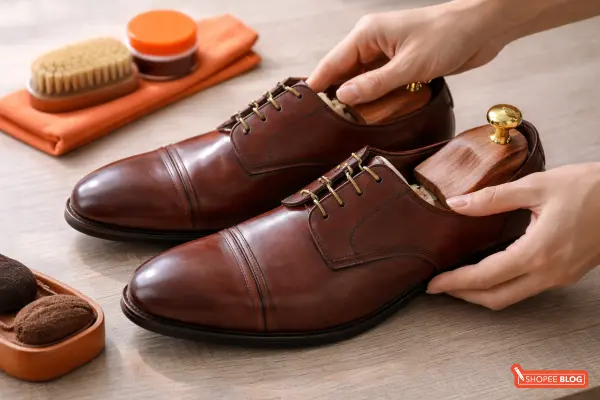
After a long day, your shoes have absorbed moisture from sweat. Always insert cedar wood shoe trees once you take them off. Cedar shoe trees help in two ways: they absorb moisture from inside the shoe and they hold the shoe in shape as it dries. This prevents the interior lining from rotting and avoids deep creases forming on the leather upper. Shoe trees are an inexpensive tool that significantly extends the life of leather shoes by keeping them dry and in form.
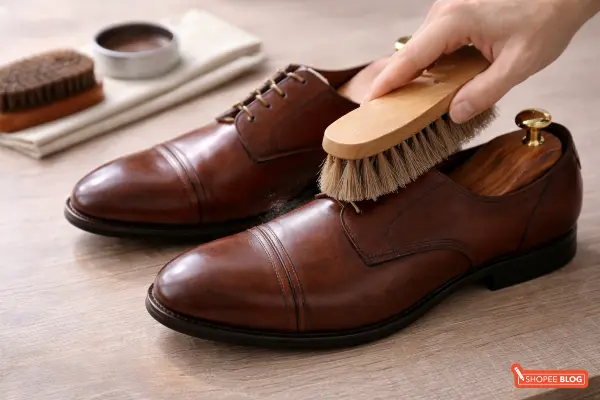
Dust, dirt, and grit can abrade and dry out the leather. After each use, give your shoes a quick brush with a soft horse hair brush or wipe with a slightly damp cloth to remove surface dirt. This prevents grime from building up or getting ground into the leather over time.
Pro tip: Remember to use natural bristle brushes as synthetic bristles can be too abrasive and may scratch the leather.
Try not to wear the same pair of leather shoes every single day. Leather benefits from “rest” – it needs time to fully dry out from foot perspiration. Rotating between two or more pairs of shoes allows each pair to breathe and recover between wears. This reduces stress and prevents your shoes from wearing out as quickly.
Even with daily brushing, your leather shoes will periodically need a more thorough cleaning and moisturising. Follow this cleaning and conditioning routine every few months (or as needed) to keep the leather supple and clean:
Take off the laces to avoid staining them and to access the tongue and eyelets easily. Insert shoe trees to hold the shape and provide a firm surface while cleaning.
Use a clean horsehair brush to remove dust, dirt, and flaking polish. Skipping this step can cause scratches when applying creams. Use a separate brush for cleaning and polishing to avoid grinding dirt into the leather.
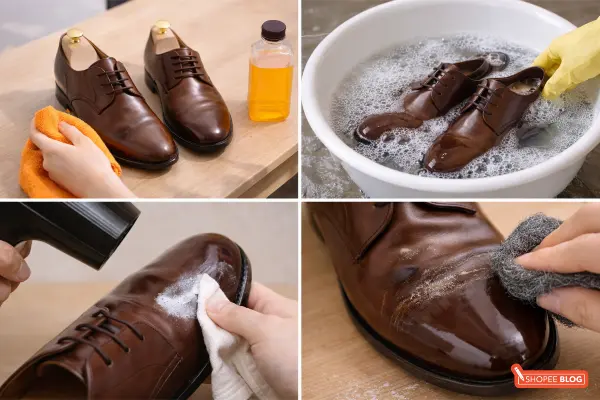
For light cleaning, apply a small amount of leather cleaner to a soft cloth and gently wipe the surface. Avoid soaking the leather – never submerge shoes in water, as this can cause permanent stains. Use a damp cloth for spot cleaning. For heavy buildup or deep stains, use specialised cleaners (e.g. saddle soap or Saphir Renomat) sparingly, about 1–2 times a year. Wipe off excess product and let the shoes air-dry.
Once dry, apply a quality leather conditioner using a cloth or brush in small circular motions, covering all areas. Conditioning restores natural oils, preventing brittleness and cracking. Let the leather absorb the product for a few hours or overnight, then buff off any excess. The leather may look softer and slightly matte after conditioning – this is normal.
Cleaning and conditioning keep leather healthy, while polishing enhances its appearance and adds protection. Regular polishing maintains a sharp finish, helps repel moisture and dirt, and makes scuffs easier to buff out. Water beads off a well-waxed surface instead of soaking in. Touch up the polish when the shine fades or before wearing your shoes in wet conditions.
There are two main types of leather shoe polish – cream polish and wax polish – each with a distinct purpose.
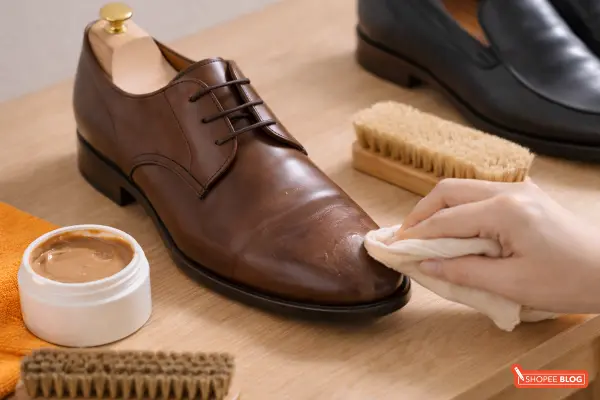
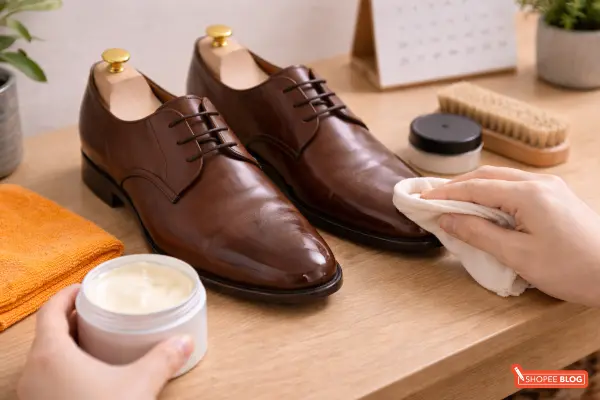
Apply after conditioning using a matching colour. Cream polish restores pigment, covers scuffs, and revives faded areas while adding mild nourishment and a soft sheen.
Use a small amount with a cloth or applicator brush, focusing on discoloured areas. Allow it to dry briefly, then buff with a horsehair brush for an even finish.
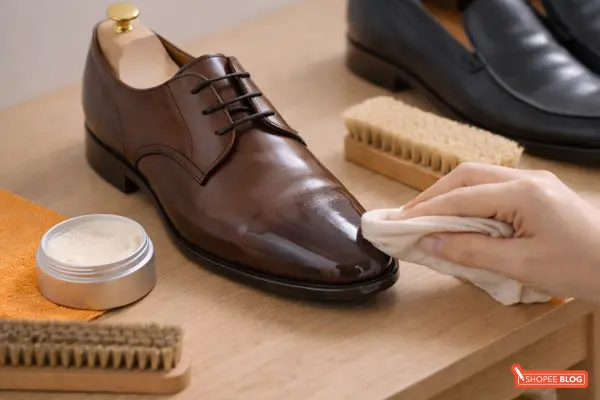
Apply wax polish after cream polish if additional gloss or protection is desired. Wax builds surface shine, especially on the toe and heel, and creates a water-resistant barrier.
Apply thin layers in light circular motions, allowing each layer to haze before brushing and reapplying. Two to three layers give a dressy shine, while four to five layers improve water resistance. Finish with a brisk buff to bring out the gloss.
Note: Always clean and condition first before applying polish. Polishing a dirty or dry shoe can seal in grime or prevent conditioner from penetrating. Also, use the proper colour polish – the closest match to your leather – to keep the finish even.)
In Singapore’s hot and humid climate, store leather shoes in a cool, well-ventilated area away from direct sunlight and moisture. High humidity increases the risk of mould, while heat can dry and crack leather over time.
Avoid leaving shoes near windows with strong sun exposure, in enclosed cabinets without airflow, or in storerooms that trap humidity. If needed, use a dehumidifier or moisture absorbers in your wardrobe to reduce excess moisture.
Insert shoe trees whenever shoes are off your feet for more than a day, including long-term storage. They maintain shape and absorb residual moisture.
If unavailable, loosely stuff toes with acid-free paper. Do not stack shoes under heavy items, as pressure can distort their shape.
Store shoes in cloth dust bags or wrapped in cotton to prevent dust while allowing airflow. Avoid plastic bags or airtight containers, as trapped moisture can cause mould and deterioration.
Do not leave leather shoes unworn for long periods without maintenance. Over time, leather can dry out even in storage. Periodically inspect, condition, and polish them to prevent stiffness and cracking.
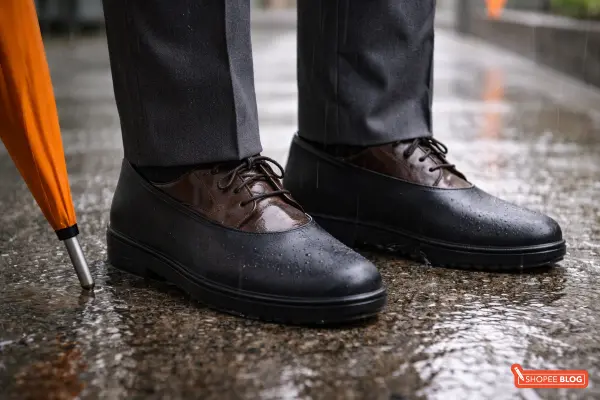
What if you get caught in the rain or need to wear your leather shoes in wet weather? Moisture is a major factor in leather damage, but you can manage it:
Use a waterproofing spray or build thin layers of wax polish for added water resistance. Choose silicone-free sprays to avoid drying the leather over time. Wax will not make shoes fully waterproof, but it helps repel rain and reduce moisture absorption.
During heavy downpours or monsoon periods, wear rubber overshoes to protect leather from rain and dirty pavement. This is especially useful for dress shoes during MRT and office commutes.
If shoes get soaked, avoid heat or direct sun, as this can cause cracking. Remove laces and insoles, pat dry with a towel, then stuff with newspaper or insert shoe trees to absorb moisture. Air-dry in a cool, ventilated room. Replace damp newspaper if needed. Let shoes dry completely before wearing or treating them.
After your leather shoes have fully dried, apply leather conditioner to restore lost oils and prevent stiffness or cracking. This also helps reduce water marks. Reapply polish if necessary.
Keep leather as dry as possible, and combine prevention with prompt aftercare to minimise long-term damage.
In Singapore’s humid climate, mould can form if shoes are stored damp. Act quickly. Take shoes outdoors and wipe with a cloth lightly dampened in equal parts white vinegar and water to kill spores. Let them air-dry in a shaded, ventilated area, then apply conditioner to restore moisture. Prevent recurrence by storing shoes dry, with good airflow or moisture absorbers.
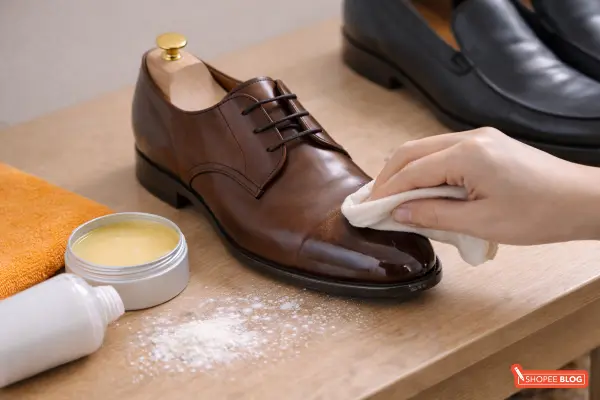
For spills, blot immediately. Clean mild stains with leather cleaner or saddle soap using a damp cloth, then wipe and air-dry. For oil stains, apply talcum powder or cornstarch overnight to absorb residue. Avoid harsh chemicals that may damage dye. After cleaning, condition the leather and use matching cream polish to restore colour if needed.
Peeling and cracks result from dryness or worn finishes. Prevention is key – condition regularly and avoid heat exposure. Minor damage can be improved by cleaning the area, applying leather filler or repair glue, then blending with matching dye or cream polish. Finish with conditioner. Severe peeling, especially on bonded leather, may require professional repair or replacement.
Vaseline (petroleum jelly) can provide temporary shine or soften stiff leather, but it is not recommended for regular use. It does not properly absorb into leather and can clog pores, reducing breathability. Over time, this may cause greasiness, discolouration, trapped residue, and even drying beneath the surface. It also attracts dust and dirt.
For long-term care, use proper leather conditioners and creams designed for shoes. These products absorb into the leather, restore moisture, and protect without causing damage. Avoid petroleum-based quick fixes and stick to dedicated leather care products.
Proper leather care also means avoiding damaging products and practices.
Conditioning frequency depends on wear and climate. As a general guideline, conditioning every 3 months is a good routine for shoes in regular rotation. For example, if you wear a pair of leather dress shoes once or twice a week, conditioning them about every 3 months is usually sufficient to keep the leather supple.
However, consider these factors to adjust the schedule:
Daily wearers will need conditioning more often. If you’re in the same leather shoes almost every day, monthly conditioning might be beneficial. The constant flexing and exposure means they use up their oils faster. Conversely, shoes worn only occasionally (a few times a year) might be fine with a light conditioning twice a year.
In Singapore’s humid climate, leather is exposed to moisture and frequent rain. Condition every 2–3 months, and always after shoes have been soaked and fully dried. In air-conditioned environments, leather may dry out faster and need slightly more frequent care.
Ultimately, let your shoes tell you. If the leather starts to look dull, chalky, or creased more than usual, it’s crying out for moisture. A healthy leather shoe should look slightly rich in color and feel pliable, not brittle. If you notice early signs of dryness or small cracks, condition immediately. It’s easier to maintain leather than to resuscitate it after it’s completely dried and cracked.
One thing to avoid is over-conditioning. More is not always better – you don’t need to slather on conditioner every week unless your shoes truly need it. Too much can make the leather overly soft or leave a residue. Stick to a regular schedule and adjust as needed. Many shoe enthusiasts find that conditioning 3-4 times a year keeps their leather in prime condition, with maybe an extra treatment in between if the shoes have been through harsh weather or long storage.
Taking the time to care for your leather shoes is absolutely worth it. With regular cleaning, proper conditioning, and a few smart habits, your shoes will reward you with durability and timeless style. For more fashion inspiration on pairing your immaculate shoes with great outfits, check out Styled by Shopee – our series on outfit ideas and styling tips. And if you’re shopping for clothes to complement your look, especially if you need sizes that fit just right, our guide on plus size clothes in Singapore is a great resource.
A wheel-y good travel companion!
Surprise her this Mother’s Day – Mum’s the word!
Leave a Comment