Home & Living

How To Clean Stainless Steel Appliances Without Leaving Streaks

If you’re anything like me, stainless steel appliances were your “adulting” dream… until the smudges, streaks and mystery splatters showed up. Over the years of many kopi chats with other aunties and uncles, and even professional cleaners I previously hired, I’ve collected a set of simple, low‑stress tricks that actually work in real kitchens, not showroom floors. 

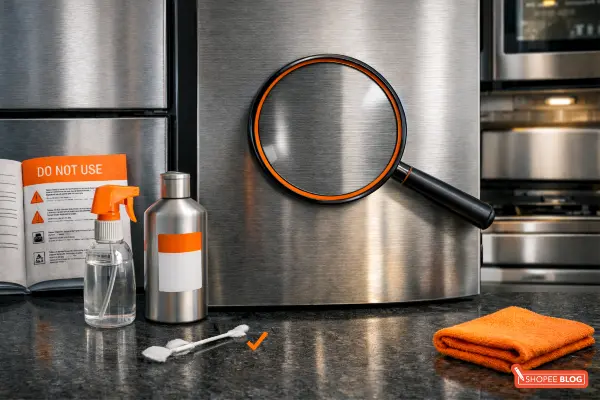
Step 1: Know your stainless steel finish

Not all stainless steel surfaces behave the same. Some have a brushed finish, some are highly polished, and some modern models even have special coatings to resist fingerprints.

Before you start, do this:

  • Check the manual for any brand‑specific instructions or “do not use” warnings.
  • Look for the grain – faint lines running horizontally or vertically.
  • Test any new cleaner on a small, hidden spot at the side or bottom.

This tiny bit of homework saves you from long‑term damage like clouding or patchy shine.

Step 2: Your everyday stainless steel cleaning routine

For everyday fingerprints and light grease, I always start with the gentlest method: mild dish soap and warm water.

Follow this simple routine:

  1. Dampen a soft microfibre cloth with warm water and wring it out.
  2. Add a small drop of mild dish soap to the cloth (not directly on the appliance).
  3. Wipe in the direction of the grain to lift prints and light grime.
  4. Rinse a second cloth in clean water and wipe away any soapy residue.
  5. Dry and lightly buff with a third dry microfibre cloth, again following the grain.

This everyday routine is the backbone of understanding how to clean stainless steel appliances without streaks, and it’s usually enough for fridges, ovens and dishwashers that get wiped down regularly.

Step 3: Deep cleaning for grease, streaks and stubborn gunk

When life happens (think curry splatters, oily fingerprints or dried sauces), you’ll need a slightly stronger approach.

Try these deep‑clean tips:

  • For sticky grease: Use the same dish soap and warm water mix, but let the cloth sit on the spot for a minute before wiping.
  • For dried splatters: Gently work the area with a soft, non‑abrasive sponge, still following the grain.
  • For streaks from previous cleanings: Re‑wipe with a damp, soap‑free cloth, then dry thoroughly. This often fixes “ghost” streaks left by old product.

Avoid scrubbing aggressively, even when you’re annoyed at that one stubborn mark; micro‑scratches build up over time and are much harder to fix.

Step 4: Natural cleaning tricks that actually work

Over time, I’ve learnt which remedies are worth keeping and which are better for social media than your appliances.

Some reliable natural options:

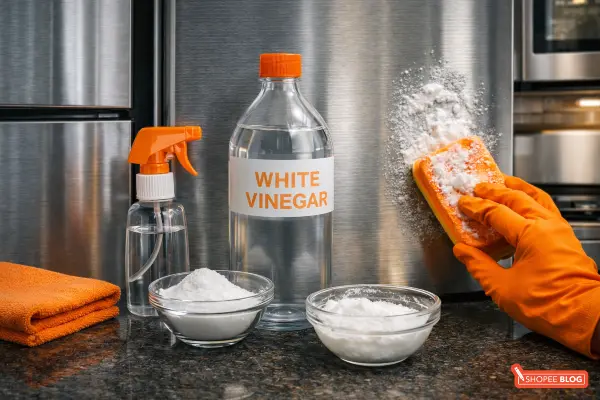
  • White vinegar (for fingerprints and light mineral spots): Lightly mist a microfibre cloth with diluted vinegar (equal parts water and vinegar), then wipe with the grain, followed by a clean damp cloth and dry buff.
  • Baking soda paste (for tougher food stains): Mix baking soda with a little water into a paste, apply gently with a soft sponge, then rinse and dry thoroughly.

These methods are great when you want a stainless steel clean and polish effect without strong chemical smells, especially in smaller flats.

Step 5: Using commercial stainless steel cleaners safely

On weeks when I’m rushing, I do reach for a commercial stainless steel cleaner or polish. Used correctly, they cut down on time and give a very satisfying showroom‑style shine.

If you use one:

  • Choose a product labelled for stainless steel, preferably non‑abrasive and free of bleach.
  • Spray onto a cloth (not directly on the appliance) and work with the grain.
  • Buff off any residue with a separate dry cloth to avoid a greasy film.

Don’t layer different brands or types of polishes on top of each other; this is how sticky build‑up and cloudy patches start.

Cleaning stainless steel cookware without ruining it

Cleaning stainless steel cookware is a little different from wiping down your fridge door, because you’re dealing with high heat, burnt bits and sometimes discolouration.

For everyday stainless steel pan clean jobs:

  • After cooking, let the pan cool slightly, then add warm water and a drop of dish soap.
  • Use a soft sponge to lift food residue; avoid steel wool, which scratches.
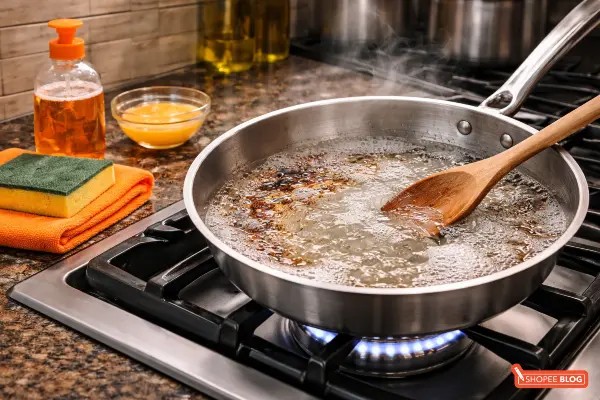
  • For stuck‑on bits, simmer water with a bit of dish soap in the pan for a few minutes, then scrub gently once cooled.

This keeps your pans functional and presentable without stripping their finish.

How to handle burnt food and discolouration on pans

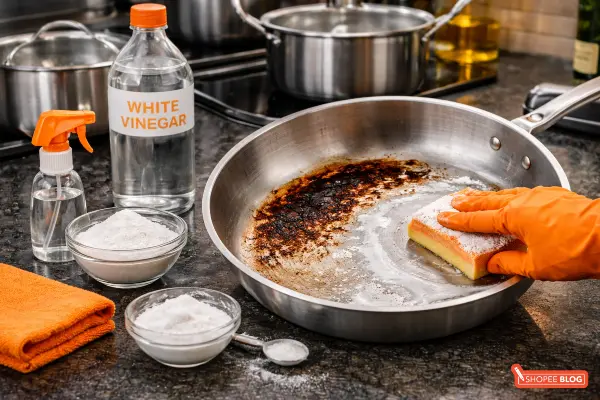
We’ve all burnt something “just this once”. When cleaning stainless steel cookware that’s badly stained, you need patience more than muscle.

Try this:

  • Make a paste with baking soda and water, apply it to the burnt area and let it sit.
  • Gently scrub with a non‑abrasive sponge, then rinse and repeat if needed.
  • For rainbow‑coloured heat stains, a mild acidic cleaner like diluted vinegar can help restore the look.

Avoid harsh scouring powders and metal pads, no matter how tempting; they create fine scratches where food and stains cling even more.

Removing rust stains from stainless steel (yes, it’s possible)

Stainless steel doesn’t rust easily, but tiny rust‑coloured spots can appear from mineral deposits, contact with other metals or scratches.

When removing rust stains from stainless steel:

  • Start with a paste of baking soda and water, rub gently along the grain, then rinse and dry.
  • For tougher specks, a specialised stainless steel cleaner labelled for rust removal can help, but always test on a hidden spot first.
  • Dry the area thoroughly and keep it moisture‑free for a while to prevent the spots from returning.

If the rust is deep or widespread, it may be actual corrosion, which is harder to fix at home and may need professional attention.

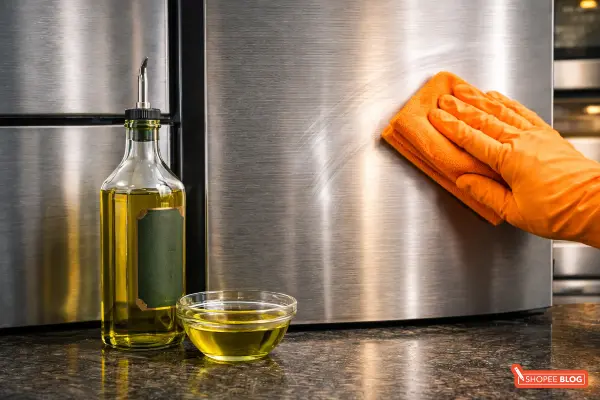
Does olive oil really shine stainless steel?

Yes, olive oil can add a temporary shine, but it’s more of a quick trick than a long‑term solution. A tiny amount rubbed on with a microfibre cloth can make stainless steel look glossier and help hide light streaks.

However, it has downsides:

  • If you use too much, it feels greasy and attracts dust and fingerprints.
  • Over time, oil can turn sticky, especially in warm kitchens, making future cleaning harder.

Personally, I treat olive oil as an emergency shine‑booster for last‑minute guests, and stick to products designed to clean and polish stainless steel for regular use.

What are some common mistakes when cleaning stainless steel?

Despite the name, stainless steel is not completely damage-proof. Certain cleaning products and habits can weaken or remove its protective layer, which helps prevent rust and corrosion.

Avoid these common mistakes when cleaning stainless steel surfaces:

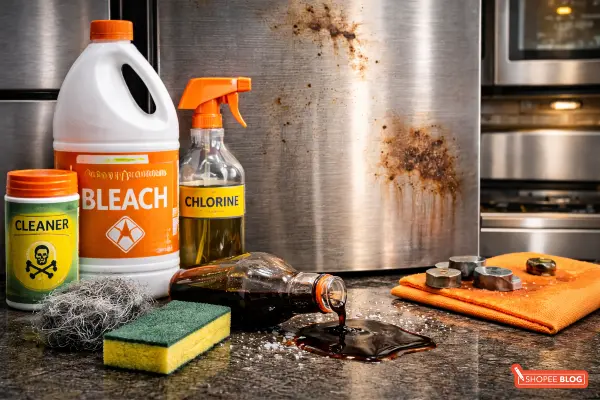
  • Using abrasive scrubbers such as steel wool or scouring powders. These can scratch the surface and leave dull patches.
  • Scrubbing against the grain of the metal. This can create visible streaks and fine scratch marks.
    Using harsh chemicals like bleach, chlorine-based sprays, or strong oven cleaners. These can damage the protective layer and cause discolouration.
  • Letting water or cleaning solution air-dry on the surface. This often leaves water spots or cloudy streaks.
    Leaving salty or acidic spills (such as soy sauce, vinegar, or bleach splashes) on the surface for too long. These substances can slowly corrode the metal.
    Trapping moisture under objects such as magnets, dish racks, or rubber mats. Over time, this can lead to pitting or rust spots.

Once the protective layer is damaged, stainless steel may develop permanent stains, discolouration, or corrosion. These issues are much harder to repair at home.

Does dishwasher soap damage stainless steel?

Dishwasher detergent is designed to remove heavy grease, so it can be too harsh for stainless steel surfaces if used incorrectly. For cookware and utensils, it is usually safe in a dishwasher when used as directed and rinsed properly.

Problems may occur when:

  • Concentrated detergent sits on stainless steel too long, which can leave residue or dull the finish.
  • Dishwasher powder or tablets are used directly on appliances like a hob, fridge, or sink. These are stronger than regular dish soap.
    Items remain in a damp dishwasher after the cycle, trapping moisture and detergent residue.

When cleaning stainless steel appliances by hand, use mild dish soap instead of dishwasher detergent, then rinse and dry the surface thoroughly.

How to clean stainless steel appliances for that long-lasting shine

Cleaning stainless steel appliances becomes much easier to live with once you get into the habit. Focus on soft cloths, mild cleaners, following the grain, and always drying and buffing, and you’ll keep everything from your fridge doors to your stainless steel cookware looking reliably polished. If you’re in full home‑refresh mode, you can also learn how to care for leather shoes to match your sparkling kitchen, or let one of the best robot vacuums pick up the floor crumbs while you conquer the countertops.

Caryn Tan

Always on the hunt for what's new, Caryn is all too familiar with falling "victim" to the novel and gimmicky. But that's not all her credit card thanks her for. Also into techy stuff, she gets just as excited about the latest tech drops as she does about quirky lifestyle finds — whether it's a smart home upgrade or a pocket-sized curiosity that claims to change your life.

Leave a Comment

Recent Posts