
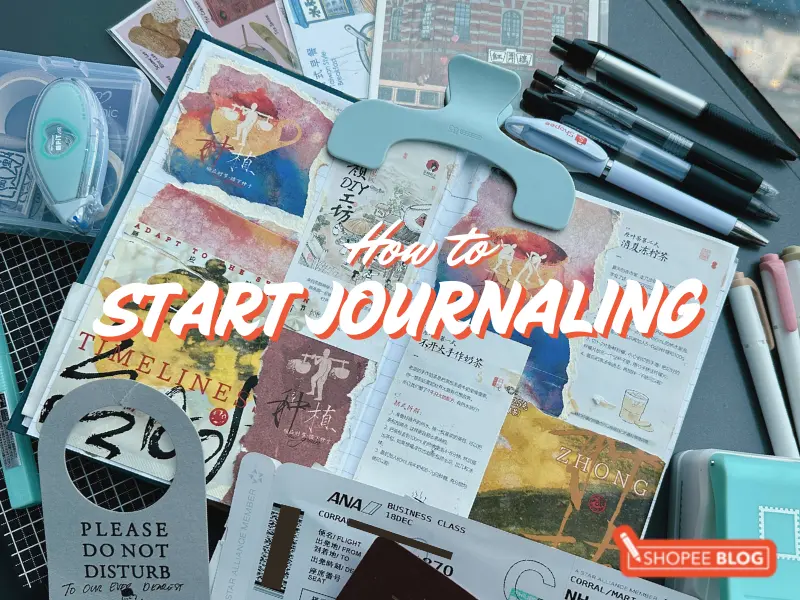
Two years ago, I got curious when my friend carefully peeled the sticker off her iced latte cup and stuck it into her notebook. “It’s junk journaling,” she said. Immediately, I thought about all of the ticket stubs, travel maps, concert wristbands and cute packaging I couldn’t throw away but never actually used. That moment inspired me to start my own junk journal.
Traditional journaling never quite stuck with me either. Most days, I just didn’t have the brain space for that. Junk journaling felt different. No pressure. No rules. Just sticking down little pieces of my life and letting that be enough. And honestly, that made journaling feel a lot less scary for me. It wasn’t about writing first. It was about keeping. And that shift changed everything.
What is a junk journal?
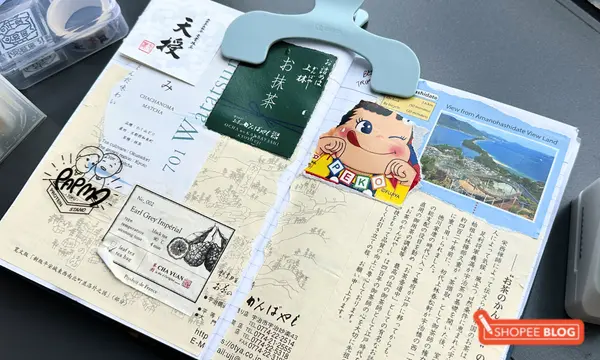
If you’ve never heard of it before, a junk journal is exactly what it sounds like: a journal made from “junk”. Receipts, ticket stubs, coffee cup labels, magazine cut-outs, packaging, maps, stickers, and even random paper scraps you’d normally throw away. Instead of writing pages and pages of text, you build your journal visually. You paste first. You write later if you feel like it. That’s what makes it such a gentle entry point when you’re figuring out how to start journaling.
There are no rules about structure. No expectation to be poetic. No pressure to fill an entire page with thoughts you may not even fully understand yet. Sometimes all you do is stick down a concert wristband and write the date. Sometimes you make a whole spread around letters from friends, creating tiny pockets to hold the notes and bits of wrapping paper. It’s memory-keeping without the formality.
How to start junk journaling (step-by-step beginner guide)
If you’ve been wanting to begin but keep overthinking it, here’s the simplest way to start junk journaling.
1. Start with what you already have
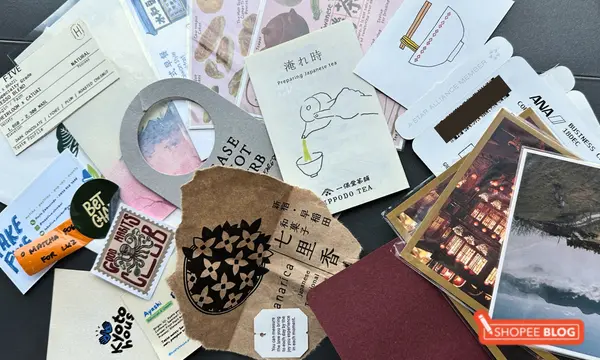
Before buying anything, look around your room.
- Old receipts from café dates.
- Boarding passes from trips.
- Concert wristbands.
- Letters from friends.
- Cute packaging you couldn’t throw away.
My first proper junk journal page was built around letters and gifts I received in 2023. I kept bits of wrapping paper, cut out small details from the packaging, and even made pockets to hold the letters. That page didn’t start with writing; it started with collecting.
2. Collect first, create later
I don’t actually junk journal during travel. When I’m travelling, I’m on the go, rushing for trains, finding food, taking photos. But I collect everything: maps, tickets, random stickers, and even café labels (yes, I’ve become that person now). Then, when I’m home, I take everything out and build a page around it. There’s no rush. No deadline. Just vibes. You don’t need to journal daily. You just need to gather pieces of your life as you live it.
3. Keep your supplies simple
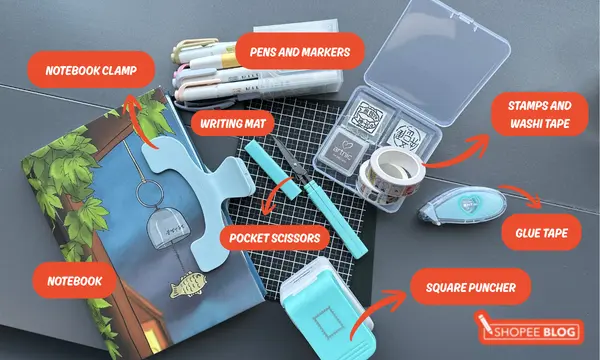
You truly don’t need a massive stationery haul to start. At the beginning, all you need is:
Over time, though, you might slowly build a small kit that makes the process smoother and more enjoyable. Here’s what I currently use:
- Custom notebook (a personalised gift from a relative, which makes it feel extra special).
- Journal clamp / Ukanmuri clip to hold pages open while pasting or writing.
- Writing mat with grid lines to guide calligraphy and prevent ink from bleeding through.
- Square puncher (a gift from a coworker) to neatly punch small sections from larger packaging or tickets.
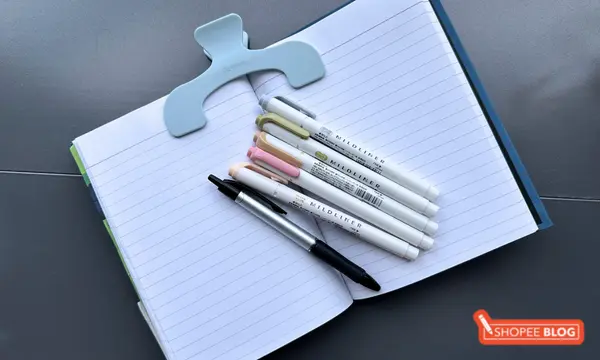
- Coloured pens and markers, depending on my mood.
- Stamps and washi tape for simple design touches.
But if you’re learning how to start journaling, remember: tools are supportive, not essential.
4. Add words only if you want to
This is where many people get stuck. They think journaling = writing long reflections. But in a junk journal, you can:
- Just write the date.
- Add one sentence.
- Use a short journal entry prompt like:
- “Why did I keep this?”
- “What did this moment feel like?”
- “What version of me existed here?”
Sometimes, I start with the pasting and let the memory surface naturally. The writing becomes secondary. That’s why junk journaling feels so freeing; it removes the blank page anxiety that usually comes with figuring out how to start journaling.
6. Let it be messy
I don’t pre-plan my spreads. I paste as I go. If something overlaps awkwardly, I leave it. If the page feels chaotic, that’s fine. Not every spread has to be Pinterest-perfect. Journaling doesn’t need to look aesthetic to be meaningful. It just needs to feel honest.
Journal prompt ideas you can try
“Okay but what if I still don’t know what to write?”
Even with a junk journal, there are days when you paste something down and just… stare at it. That’s where simple journaling prompts come in. Not the intense, soul-searching kind. Just small nudges to help you reconnect with the moment you’re documenting. Because sometimes, the memory is already there, it just needs a question to unlock it.
Here are a few gentle journal entry prompts I actually use when junk journaling:
- Why did I keep this?
- What did this moment feel like?
- Who was I with, and what was the energy that day?
- What small detail would I forget if I didn’t write it down?
- If this page had a title, what would it be?
If you want a little more structure, here are some easy journaling prompts you can return to anytime.
Journal prompts for beginners
- What did today feel like in three words?
- What’s something small that made me smile this week?
- What’s currently taking up space in my mind?
- What am I looking forward to?
- What do I need more of right now?
Junk journaling prompts
- Paste something from this week and explain why you kept it.
- What memory does this ticket/receipt/sticker bring back?
- Create a page that represents your current season of life.
- What song was I obsessed with during this time?
- If this spread had a colour palette, what mood would it be?
Journal prompts for emotional release days
- What emotion have I been avoiding?
- If my anxiety had a voice, what would it say?
- What version of me am I growing into?
- What am I proud of that no one else sees?
- What would I tell my younger self about this phase?
The beauty of journaling prompts is that they remove the pressure to be brilliant. You’re not trying to produce literature. You’re just responding to a question. And sometimes, that small response is enough to unlock something bigger.
Frequently asked questions about junk journaling
Is junk journaling good for mental health?
For me, yes. It feels freeing because I don’t have to think too hard or articulate everything perfectly. I’m not trying to write a polished reflection. I’m just preserving moments. Random bits of “junk” bring back entire memories. The conversations. The energy. The emotions I felt at that time. It resurfaces happiness I might’ve forgotten. It helps me process heavier moments visually. And it reminds me that even ordinary days were worth keeping. Journaling doesn’t need to be intense to be therapeutic. Sometimes it’s just about giving your experiences space.
Do you need to journal every day?
No. And I say this as someone who journals very sporadically. I don’t journal daily. I journal when I have the time and energy to be creative. Some weeks I don’t touch my notebook at all. Then one weekend, I’ll suddenly make three spreads in one sitting. That’s normal. If you’re learning how to start journaling, remove the “daily habit” pressure first. Consistency can come later, but creativity shouldn’t feel forced!
Is junk journaling expensive?
Not at all. It can actually be one of the cheapest creative hobbies you have. The whole concept is built around using what you already own. Receipts, packaging, old magazines, tickets, stickers, these are things you’d normally throw away. If you want to add supplies, you really don’t need much. Daiso, Popular, NBC, or Shopee have affordable stickers, glue tape and paper. But they’re extras, not requirements. At its core, a junk journal is about memory-keeping.
Start small, keep what matters
At the end of the day, journaling isn’t about creating something impressive. For me, it’s about staying grounded. Between work, travel, plans, and constant notifications, sitting down with my notebook forces me to slow down, even if only for an hour. If you’re figuring out how to start journaling, don’t wait for the perfect mindset or the perfect notebook. Start small, keep what feels meaningful, and let the rest unfold naturally.